تحميل الموقع كاملًاDownload the whole site
حمّل نسخة كاملة من هذا الموقع في ملف ZIP واحد: الصفحة والرسوم والفيديوهات الخمسة ودليل النشر. الحزمة جاهزة للنشر على Netlify كما هي (الخطوات في ملف DEPLOY.md داخل الحزمة) أو للتصفح محليًا دون إنترنت. يُجمَّع الملف داخل متصفحك مباشرة، ولا يُجمع أي بيانات عن الزوار.Get a complete copy of this site as one ZIP: the page, the illustrations, all five videos and the publishing guide. The package is ready to publish on Netlify as-is (steps in DEPLOY.md inside the package) or to browse locally offline. The file is assembled right in your browser; no visitor data is collected.
⛲ما هذا المشروع؟What is this project?
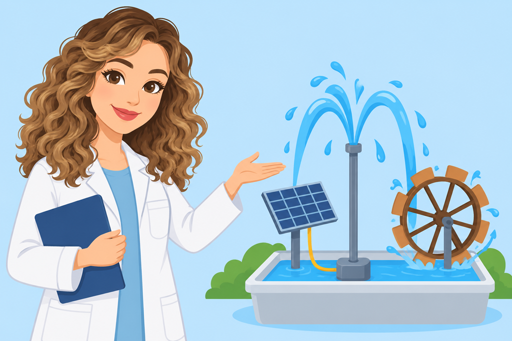
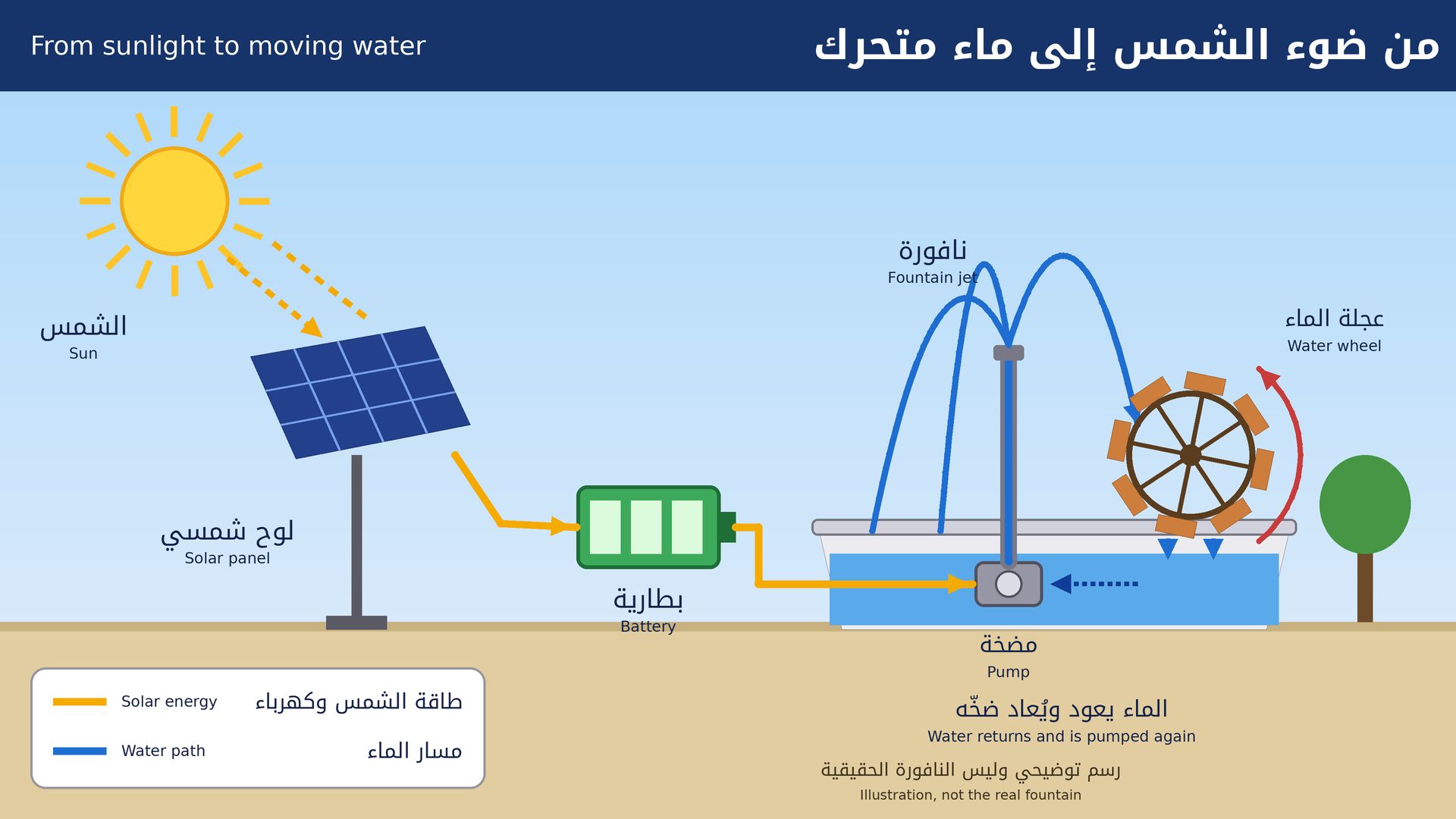
النافورة الذكية نموذج علمي مبني من مواد بسيطة، يجمع أربعة علوم في منظومة واحدة: الطاقة الشمسية، الكهرباء، حركة الماء، والحركة الدائرية. لوح شمسي يشحن بطارية، البطارية تشغّل مضخة، المضخة تدفع الماء إلى الأعلى فيتدفق ويحرّك عجلة مائية، ثم يعود الماء إلى الحوض ليُضخ من جديد. The Smart Fountain is a science model built from simple materials. It joins four sciences in one system: solar energy, electricity, moving water, and circular motion. A solar panel charges a battery, the battery runs a pump, the pump pushes water up so it flows and turns a water wheel, and then the water returns to the basin to be pumped again.
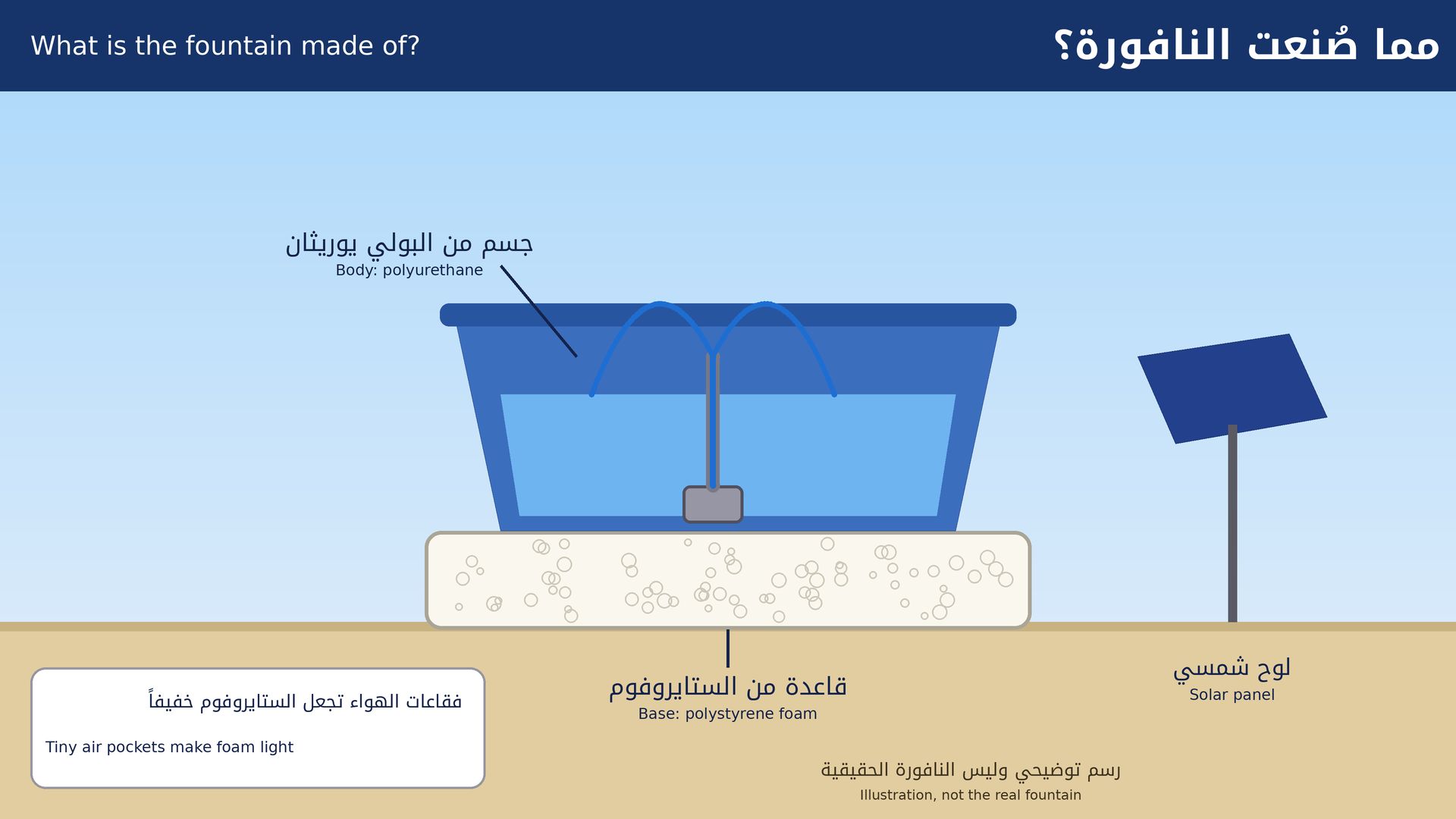
موجود فعلاً جسم النافورة من مادة البولي يوريثان، القاعدة من فوم البوليستيرين (الكَلْكَر)، لوح شمسي مع بطارية لتعمل نهارًا وليلًا، مضخة ماء، وعجلة مائية من طقم علوم الطاقة المائية. Already built The fountain body is polyurethane, the base is polystyrene foam, a solar panel with a battery so it runs day and night, a water pump, and a water wheel from a hydro-energy science kit.
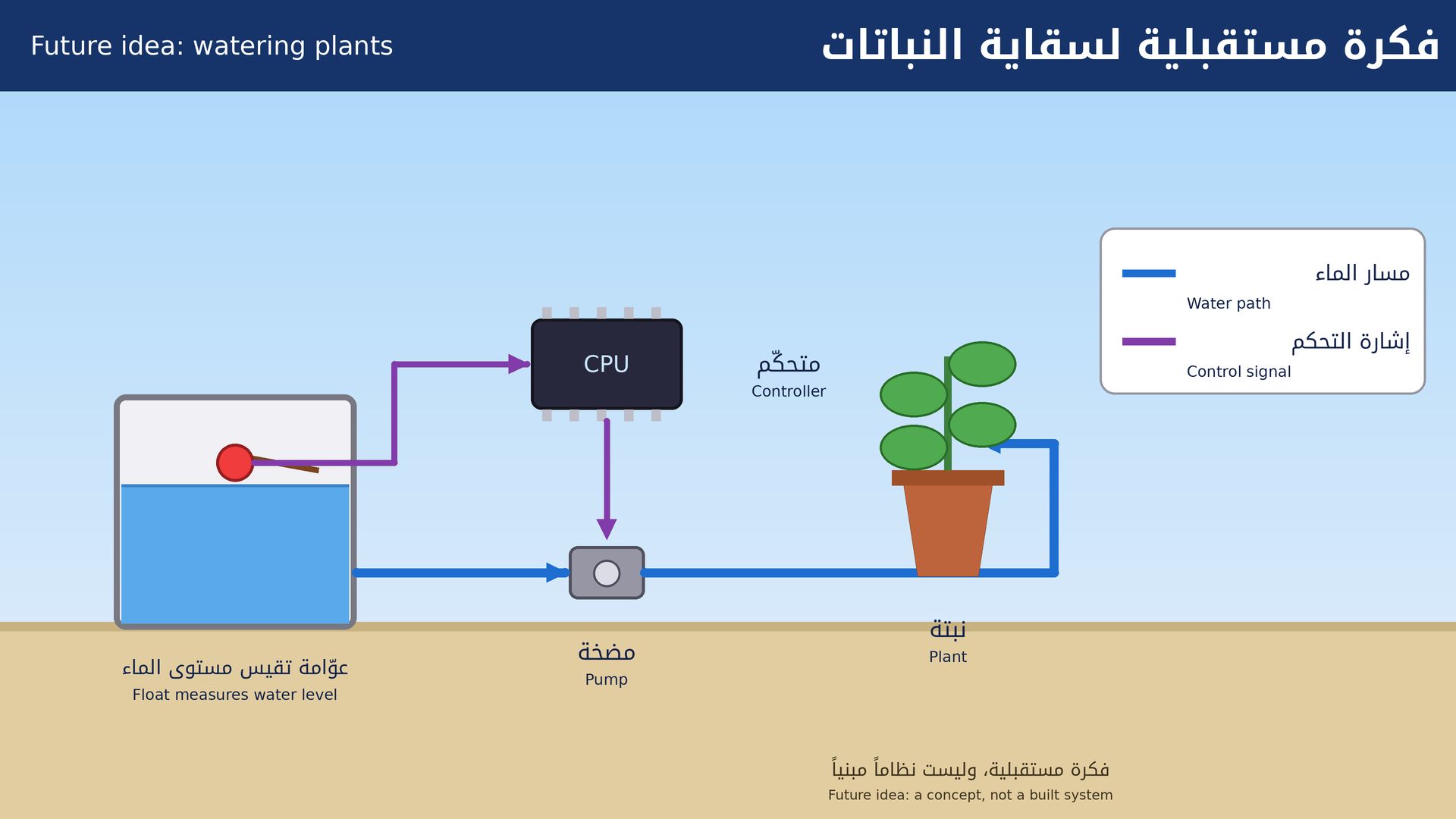
فكرة مستقبلية سقي النباتات تلقائيًا، عوّامة لقياس منسوب الماء، وروبوت ليغو WeDo 2.0 لتشغيل وإطفاء المضخة وروبوت آخر يوجّه اللوح نحو الشمس. هذه أفكار مخطط لها وليست مبنية بعد. Future idea Automatic plant watering, a float to measure the water level, a LEGO WeDo 2.0 robot to switch the pump on and off, and another robot that aims the panel at the sun. These are planned ideas, not built yet.
⚡من ضوء الشمس إلى ماء متحركFrom sunlight to moving water
اختر العمر لقراءة الشرح المناسب:
Pick an age to read a matching explanation:
السلسلة كاملة خطوة بخطوةThe full chain, step by step
ميزان الطاقة بالأرقامThe energy budget, in numbers أرقام توضيحيةillustrative numbers
مثال محسوب بأرقام افتراضية وليست قياسات من النافورة الحقيقية: لوح بمساحة 0.1 م² وكفاءة 20٪ أمام شمس 1000 واط/م² يعطي نحو 20 واط كهرباء. إذا احتاجت المضخة 6 واط، يبقى فائض يشحن البطارية في النهار. بطارية 12 فولت بسعة 7 أمبير·ساعة تخزن 84 واط·ساعة؛ بمضخة 6 واط هذا يكفي نظريًا نحو 14 ساعة — عمليًا أقل بسبب الفقد. A worked example with made-up numbers, not measurements from the real fountain: a 0.1 m² panel at 20% efficiency in 1000 W/m² sunlight gives about 20 W of electricity. If the pump needs 6 W, the surplus charges the battery by day. A 12 V, 7 Ah battery stores 84 Wh; with a 6 W pump that theoretically lasts about 14 hours — in practice less, because of losses.
🔆الألواح الشمسية: ممّ تصنع وكيف تعمل المنظومةSolar panels: what they are made of, and how systems run
أ) ممّ يُصنع اللوح الشمسي؟A) What is a solar panel made of?
قلب اللوح خلايا من السيليكون، وهو عنصر شائع جدًا (المكوّن الأساسي للرمل). كل خلية هي شريحة شبه موصلة فيها وصلة p-n: طبقتان من السيليكون مطعّمتان بشوائب مختلفة. حين يمتص السيليكون الضوء، تتحرر إلكترونات وتتحرك في اتجاه واحد عبر الوصلة، فيتولد جهد وتيار كهربائي مستمر. فوق الخلايا زجاج واقٍ وطبقة مضادة للانعكاس، وتحتها غلاف خلفي وإطار ألمنيوم، وتُربط الخلايا على التوالي ليصل الجهد إلى القيمة المطلوبة (مثل 12 أو 18 فولت). The heart of the panel is cells made of silicon, a very common element (the main ingredient of sand). Each cell is a semiconductor slice with a p-n junction: two silicon layers doped with different impurities. When silicon absorbs light, electrons are freed and pushed one way across the junction, producing a DC voltage and current. Above the cells sit protective glass and an anti-reflective layer; behind them a backsheet and an aluminium frame; and the cells are wired in series to reach the wanted voltage (such as 12 or 18 V).
أنواع الخلايا الرئيسية ثلاثة، وتختلف في المادة والكفاءة والسعر والمرونة: There are three main cell types, differing in material, efficiency, price and flexibility:
| النوعType | المادة والمظهرMaterial & look | الكفاءة النموذجيةTypical efficiency | السعر والاستخدامCost & use |
|---|---|---|---|
| أحادي البلورةMonocrystalline | بلورة سيليكون واحدة متصلة؛ لون أسود أو أزرق غامق موحّد.One continuous silicon crystal; uniform black or dark blue. | الأعلى: نحو 20٪ فأكثر (يتجاوز 22٪ في أفضل الألواح).Highest: about 20% and up (over 22% in top panels). | الأغلى؛ الأفضل حين تكون المساحة محدودة.Most expensive; best when space is limited. |
| متعدد البلوراتPolycrystalline | عدة بلورات سيليكون مصهورة معًا؛ أزرق مرقّش.Several silicon crystals melted together; speckled blue. | وسط: أقل من الأحادي (عادة أقل من ~17٪).Middle: below mono (usually under ~17%). | أرخص تصنيعًا؛ قيمة جيدة عند توفر المساحة.Cheaper to make; good value when space is available. |
| الرقيق (ثن-فيلم)Thin-film | طبقات رقيقة من مواد مثل السيليكون غير المتبلور (a-Si) أو CdTe أو CIGS على قاعدة زجاجية أو مرنة.Thin layers of materials such as amorphous silicon (a-Si), CdTe or CIGS on a glass or flexible base. | الأدنى، لكنه يعمل جيدًا في الحر والإضاءة الخافتة.Lowest, but handles heat and low light well. | خفيف ومرن أحيانًا؛ مناسب للأسطح المنحنية والأجهزة المحمولة.Light, sometimes flexible; suits curved surfaces and portable devices. |
توجد أيضًا ألواح شبه مرنة (خلايا بلورية رقيقة على قاعدة مرنة): تجمع شيئًا من كفاءة البلورات مع خفة الوزن، وتُستخدم على الأسطح التي لا تتحمل وزن اللوح الزجاجي. There are also semi-flexible panels (thin crystalline cells on a bendable base): they mix some crystalline efficiency with low weight, and are used on surfaces that cannot carry a glass panel.
ب) أوضاع تشغيل المضخة: أربع منظومات مختلفةB) Pump operating modes: four different systems
نوع اللوح شيء، وطريقة توصيل المضخة شيء آخر. نفس اللوح يمكن أن يعمل في أي من هذه الأوضاع — الفرق في البطارية ووحدة التحكم: The panel type is one thing; how the pump is wired is another. The same panel can run in any of these modes — the difference is the battery and the controller:
1. مباشر بالشمس فقطDirect solar only
اللوح يشغّل المضخة مباشرة بلا بطارية. النافورة تعمل فقط حين تكون الشمس ساطعة؛ تضعف مع الغيوم وتتوقف في الليل. أبسط وأرخص منظومة.The panel runs the pump directly, with no battery. The fountain works only while the sun shines; it weakens under clouds and stops at night. The simplest, cheapest system.
2. لوح + بطارية تعمل عند الظلامPanel + battery that takes over in the dark
اللوح يشحن البطارية نهارًا، ووحدة تحكم (أو حساس ضوء) تنقل التشغيل إلى البطارية حين يحل الظلام — كما في مصابيح الحدائق الشمسية. هذه إحدى طرق الإعداد الشائعة، وليست الطريقة الوحيدة: التبديل يعتمد على وحدة التحكم في كل منظومة.The panel charges the battery by day, and a controller (or a light sensor) switches running to the battery when darkness falls — as in solar garden lights. This is one common setup, not the only one: switching depends on each system's controller.
3. هجين يعمل بالوضعين معًاHybrid, working both ways
اللوح والبطارية يعملان معًا: في النهار يشغّل اللوحُ المضخةَ ويشحن البطارية في آن واحد، وفي الليل تكمل البطارية وحدها. هكذا تعمل النافورة نهارًا وليلًا دون انقطاع.Panel and battery work together: by day the panel runs the pump and charges the battery at the same time; at night the battery carries on alone. This is how a fountain runs day and night without stopping.
4. شحن من الكهرباء أو مصادر أخرىCharging from mains or other sources
بعض المنظومات تقبل شحن البطارية من مقبس الكهرباء المنزلي (عبر شاحن/محوّل) أو من مصدر آخر مثل بطارية سيارة أو محطة طاقة محمولة، فتعمل حين لا تكفي الشمس. يجب أن يطابق الشاحن نوع البطارية وجهدها، وأن يكون الشحن من المقبس مهمة كبيرٍ فقط وبشاحن أصلي مطابق — الطلاب لا يتعاملون مع كهرباء الشبكة أبدًا.Some systems let the battery charge from a home wall socket (through a charger/adapter) or from another source such as a car battery or a portable power station, so they work when sunlight is not enough. The charger must match the battery's type and voltage, and wall-socket charging is an adult-only task with the correct certified charger - students never handle mains electricity.
💧الماء والحركة: المضخة والعجلةWater and motion: the pump and the wheel
الرفع والتدفق: كم تعمل المضخة؟Lift and flow: how hard does the pump work?
كميتان تحددان عمل المضخة: الارتفاع (الرأس) h — كم مترًا يرتفع الماء، ومعدل التدفق Q — كم لترًا يمر كل ثانية أو ساعة. كلما زاد الارتفاع أو التدفق احتجنا قدرة أكبر. القدرة الهيدروليكية (قدرة رفع الماء نفسها) تُحسب: Two quantities set the pump's job: the head h — how many meters the water rises, and the flow rate Q — how many liters pass each second or hour. More height or more flow needs more power. The hydraulic power (the power given to the water itself) is:
مثال أرقام توضيحية: تدفق 600 لتر/ساعة (أي 0.6 م³/ساعة ≈ 0.00017 م³/ث) وارتفاع 1.5 م تعطي P ≈ 1000 × 9.81 × 0.00017 × 1.5 ≈ 2.5 واط. هذه قدرة الماء فقط؛ المضخات الصغيرة كفاءتها محدودة، فإذا كانت كفاءتها نحو 40٪ تحتاج كهرباء بنحو 2.5 ÷ 0.4 ≈ 6 واط. Example illustrative numbers: a flow of 600 L/h (0.6 m³/h ≈ 0.00017 m³/s) lifted 1.5 m gives P ≈ 1000 × 9.81 × 0.00017 × 1.5 ≈ 2.5 W. That is the water power only; small pumps have limited efficiency, so at about 40% efficiency they need about 2.5 ÷ 0.4 ≈ 6 W of electricity.
قاعدة مفيدة من أنظمة الضخ الشمسية: كل متر ارتفاع إضافي يعني حاجة إلى واطات أكثر من اللوح. لهذا يُختار اللوح بحسب حاجة المضخة، مع فائض للغيوم. A useful rule from solar pumping systems: every extra meter of lift means more watts needed from the panel. That is why the panel is chosen to match the pump's needs, with a surplus for clouds.
العجلة المائية: طاقة الوضع تتحول إلى دورانThe water wheel: potential energy becomes rotation
الماء المرتفع يخزن طاقة وضع (E = m·g·h). حين يسقط على ريش العجلة يدفعها فتدور: طاقة الوضع → طاقة حركة للماء → طاقة حركة دورانية للعجلة. العجلات الحقيقية أنواع: عُلوية (overshot) يصلها الماء من الأعلى فتعمل جيدًا مع فرق ارتفاع كبير وتدفق صغير؛ سفلية (undershot) يمر الماء تحتها وتناسب الأنهار ذات التدفق الكبير والارتفاع الصغير؛ وبينهما صدرية (breastshot). عجلة النافورة الصغيرة تشبه الفكرة العلوية: الماء يسقط من أعلى على الريش. Raised water stores potential energy (E = m·g·h). When it falls on the wheel's paddles it pushes them around: potential energy → water's kinetic energy → the wheel's rotational kinetic energy. Real wheels come in types: overshot wheels are fed from the top and suit a large height difference with a small flow; undershot wheels have water pass underneath and suit rivers with large flow and little height; in between are breastshot wheels. The fountain's little wheel resembles the overshot idea: water falls from above onto the paddles.
العزم الذي يدير العجلة مصدره وزن الماء المتجمع في الريش: الوزن F = m·g يعمل عموديًا للأسفل، والعزم τ = r·F·sin θ حيث θ زاوية الريشة — أعظم ما يكون حين تكون الريشة أفقية (الوزن عمودي على ذراع نصف القطر)، ويصغر قرب القمة والقاع. لهذا تدور العجلة أسرع مع تدفق أكبر أو سقوط من ارتفاع أعلى. The torque spinning the wheel comes from the weight of water held in the paddles: the weight F = m·g always acts straight down, and the torque is τ = r·F·sin θ where θ is the paddle's angle - greatest when the paddle is horizontal (weight perpendicular to the radius arm), and smaller near the top and bottom. That is why the wheel spins faster with more flow or a higher drop.
الحركة الدائرية على العجلةCircular motion on the wheel
كل نقطة على حافة العجلة تتحرك في دائرة. حتى لو كانت السرعة ثابتة، فالاتجاه يتغير باستمرار — أي أن هناك تسارعًا نحو المركز (تسارع قُطْري): Every point on the wheel's rim moves in a circle. Even at constant speed the direction keeps changing — so there is an inward (centripetal) acceleration:
مثال أرقام توضيحية: عجلة نصف قطرها 0.15 م تدور دورة كل ثانيتين. سرعة الحافة v = 2πr ÷ T = 2π × 0.15 ÷ 2 ≈ 0.47 م/ث، والتسارع القطري a = 0.47² ÷ 0.15 ≈ 1.5 م/ث². القوة القطرية هنا تأتي من بنية العجلة نفسها (الأذرع والمحور) التي تشد كل جزء نحو المركز. وإذا ضاعفنا السرعة، يتضاعف التسارع أربع مرات — علاقة تربيعية مهمة في كل حركة دائرية. Example illustrative numbers: a wheel of radius 0.15 m turning once every 2 seconds. Rim speed v = 2πr ÷ T = 2π × 0.15 ÷ 2 ≈ 0.47 m/s, and centripetal acceleration a = 0.47² ÷ 0.15 ≈ 1.5 m/s². The centripetal force here comes from the wheel's own structure (spokes and axle) pulling every part toward the center. And doubling the speed quadruples the acceleration — a squared relationship that matters in all circular motion.
🧪المواد: لماذا البولي يوريثان وفوم البوليستيرين؟Materials: why polyurethane and polystyrene foam?
وصف مادتي الجسم والقاعدة كما ورد في ملف المشروع نفسه؛ لم يُتحقق منه مخبريًا. الشرح العلمي أدناه عن هاتين المادتين عمومًا.The body and base materials are stated as given in the project's own description; they were not laboratory-verified. The science below is about these two materials in general.
البولي يوريثان — جسم النافورةPolyurethane — the fountain body
البولي يوريثان عائلة من البوليمرات تتكون من تفاعل مادتين: بوليول (كحول متعدد المجموعات) مع ثنائي إيزوسيانات. يرتبط الجزيئان بروابط تسمى روابط يوريثان (كربامات)، وفي الأجسام الصلبة المصبوبة تتشكل عادة شبكة جزيئية متشابكة ثلاثية الأبعاد — بوليمر ثيرموسِت لا يذوب بعد أن يتصلب (مع العلم أن عائلة البولي يوريثان تشمل أيضًا أنواعًا ثيرموبلاستيكية TPU قابلة لإعادة التشكيل بالحرارة). هذه الشبكة المتصلة بإحكام هي سر قوته ومقاومته للماء: فهو لا يمتص الماء ولا يتفكك مع البلل المتكرر، ولذلك يصلح جسمًا لحوض ماء دائم البلل، ويُستخدم أيضًا طلاءً عازلًا للماء ورغوة عازلة ومواد لاصقة. Polyurethane is a family of polymers made by reacting two substances: a polyol (an alcohol with many reactive groups) with a di-isocyanate. The molecules join through urethane (carbamate) links, and in solid cast parts they usually form a three-dimensional crosslinked network - a thermoset polymer that does not melt once set (note the polyurethane family also includes thermoplastic varieties, TPU, that soften with heat). This tightly linked network is the secret of its strength and water resistance: it does not absorb water and does not break down with repeated wetting. That makes it a good permanent basin body, and it is also used as waterproof coating, insulating foam and adhesives.
حقيقة كيميائية ممتعة: لصنع رغوة البولي يوريثان تُضاف نقطة ماء أثناء التصنيع؛ يتفاعل الماء مع الإيزوسيانات ويطلق غاز ثاني أكسيد الكربون، وهو الذي ينفخ البوليمر فيتحول إلى رغوة مليئة بفقاعات. A fun chemistry fact: to make polyurethane foam, a little water is added during production; the water reacts with the isocyanate and releases carbon dioxide gas, and that gas is what blows the polymer into a bubble-filled foam.
فوم البوليستيرين — القاعدةPolystyrene foam — the base
القاعدة من البوليستيرين الممدد (EPS، المعروف محليًا بالكَلْكَر). فوم البوليستيرين هو 95–98٪ هواء! فقاعات هواء دقيقة محبوسة داخل جدران بوليستيرين رقيقة. لذلك هو خفيف جدًا، ولا يمتص الماء تقريبًا (خلايا مغلقة)، وعازل حراري جيد، ورخيص وسهل القص والتشكيل — مثالي لقاعدة خفيفة ثابتة يمكن نقل النافورة عليها من مكان إلى مكان. The base is expanded polystyrene (EPS). Polystyrene foam is 95–98% air: tiny air pockets trapped in thin polystyrene walls. That is why it is very light, absorbs almost no water (closed cells), is a good thermal insulator, and is cheap and easy to cut and shape — ideal as a light, steady base that lets the fountain be moved around.
مقارنة تعليمية مفيدة: البولي يوريثان الصلب المصبوب ثيرموسِت غالبًا (شبكة متشابكة لا تذوب، مع وجود أنواع ثيرموبلاستيكية منه) بينما البوليستيرين ثيرموبلاستيك (سلاسل منفصلة تلين بالحرارة وتعاد تشكيلها). مادتان «بلاستيك» لكن ببنية جزيئية وسلوك مختلفين تمامًا. A useful teaching comparison: solid cast polyurethane is usually a thermoset (a crosslinked network that does not melt, though thermoplastic polyurethanes exist) while polystyrene is a thermoplastic (separate chains that soften with heat and can be reshaped). Two "plastics" with completely different molecular structures and behavior.
🌱البيئة: طاقة نظيفة وماء يدور في حلقةEnvironment: clean energy and water in a loop
النافورة لا تحرق وقودًا ولا تصدر دخانًا أثناء العمل: طاقتها من الشمس مباشرة. والماء لا يُستهلك — نفس الماء يُضخ ويعود في حلقة مغلقة، ونضيف القليل فقط لتعويض التبخر والرذاذ وأي تسريب. هاتان الفكرتان (طاقة متجددة + إعادة استخدام الماء) هما قلب الرسالة البيئية للمشروع. The fountain burns no fuel and releases no smoke while running: its energy comes straight from the sun. And the water is not consumed - the same water is pumped and returned in a closed loop, with only a little added to replace evaporation, splashing and any small leaks. These two ideas (renewable energy + reusing water) are the heart of the project's environmental message.
توسيع الفكرة: في المناطق الجافة، منظومة ضخ شمسية مع خزان يمكن أن تسقي النباتات أو حتى ترفع ماء للقرى دون شبكة كهرباء — أنظمة الضخ الشمسي تُستخدم فعلًا لسقي المواشي في أماكن نائية حول العالم، لأن أوقات قوة الشمس تتطابق عادة مع أوقات الحاجة للماء. Extending the idea: in dry regions, a solar pumping system with a tank can water plants or even lift water for villages with no power grid — solar pumping systems are actually used for livestock watering in remote places around the world, because the strongest sunshine usually matches the times of greatest water need.
🤖أفكار هندسية مستقبليةFuture engineering ideas كلها أفكار غير مبنية بعدall are unbuilt ideas
- سقي النباتات: توصيل المضخة بأنبوب إلى النباتات؛ منظومة قائمة بذاتها يمكن أن تعمل حتى في الصحراء ما دام هناك مصدر ماء.Plant watering: connecting the pump through a tube to plants; a stand-alone system that could work even in the desert, as long as there is a water source.
- العوّامة (المِتْساب): كرة تطفو على الماء وتقيس منسوبه؛ تمنع الفيضان بإيقاف الضخ حين يمتلئ الحوض، وتمنع عمل المضخة «جافة» حين ينخفض الماء — وهي فكرة مستعملة فعلًا في أنظمة الضخ الشمسية (مفتاح عائم).The float: a ball floating on the water that measures its level; it prevents flooding by stopping pumping when the basin is full, and stops the pump from running "dry" when water is low — an idea actually used in solar pumping systems (a float switch).
- روبوت ليغو WeDo 2.0 للتشغيل والإطفاء: روبوت صغير يبنيه الطلاب ليفصل ويوصل دائرة المضخة — تدريب على التحكم والاستشعار.A LEGO WeDo 2.0 switch robot: a small robot students build to connect and disconnect the pump circuit — practice in control and sensing.
- روبوت متتبع للشمس: روبوت WeDo 2.0 ثانٍ يدير اللوح ليتبع الشمس خلال اليوم. التتبع قد يزيد الإنتاج نحو 30–40٪ في الصيف، لكنه يكلّف ويعقّد — أحيانًا يكون إضافة لوح أكبر أوفر من التتبع.A sun-tracking robot: a second WeDo 2.0 robot that turns the panel to follow the sun through the day. Tracking can raise output by about 30–40% in summer, but it costs and complicates — sometimes a bigger extra panel is cheaper than tracking.
🎓للمعلمين: دروس وتجارب قياس على النافورةFor teachers: lessons and measurement labs on the fountain
النافورة معمل مصغّر يغطي وحدات الفيزياء: الطاقة وتحولاتها، الكهرباء، الميكانيكا (رفع، تدفق، حركة دائرية)، والمواد. ثلاثة دروس جاهزة، ولكل درس ثلاث خطط تنفيذ: (أ) تفاعلية مع النافورة الحقيقية، (ب) بالفيديو والوسائل بلا عتاد، (ج) نشاط حركي جاف بلا عتاد ولا ماء (15–20 دقيقة): The fountain is a mini-lab covering physics units: energy and its conversions, electricity, mechanics (lifting, flow, circular motion) and materials. Three ready lessons, each with three delivery plans: (A) interactive with the real fountain, (B) video- and aid-based with no hardware, (C) a dry movement activity with no hardware and no water (15-20 min):
الدرس 1 — تدقيق سلسلة الطاقة (45 دقيقة)Lesson 1 — Energy chain audit (45 min)
- يرسم الطلاب مخطط السلسلة: شمس → لوح → بطارية → مضخة → ماء مرتفع → عجلة، ويكتبون نوع الطاقة في كل حلقة (إشعاعية، كهربائية، كيميائية في البطارية، حركية، وضع).Students draw the chain: sun → panel → battery → pump → raised water → wheel, and name the energy form at each link (radiant, electrical, chemical in the battery, kinetic, potential).
- يسجلون أين تضيع الطاقة في كل حلقة (حرارة، احتكاك، صوت) ويقدّرون كفاءة كل مرحلة ثم كفاءة السلسلة كلها كجداء الكفاءات.They record where energy is lost at each link (heat, friction, sound), estimate each stage's efficiency, then the whole chain's efficiency as the product of the efficiencies.
- سؤال ختامي: لماذا لا يمكن للعجلة أن تشغّل المضخة؟ (قانون حفظ الطاقة + الفقد).Closing question: why can't the wheel run the pump? (Conservation of energy + losses.)
خطط التنفيذ:Delivery plans: (أ) تفاعلية: تدقيق السلسلة على النافورة الحقيقية أمام الطلاب. (ب) بلا عتاد: مشاهدة الفيديو المناسب للعمر ثم تتبع السلسلة على الرسم التوضيحي. (ج) نشاط حركي جاف: محطات أدوار — يقف الطلاب كحلقات السلسلة (شمس، لوح، بطارية، مضخة، ماء، عجلة) ويمرّرون كرة تمثل الطاقة بالترتيب الصحيح، ثم يخلط المعلم الأدوار ويعيد الطلاب ترتيب أنفسهم، ويُختم برسم السلسلة على السبورة من الذاكرة. (A) interactive: audit the chain on the real fountain in front of the class. (B) no hardware: watch the age-matched video, then trace the chain on the schematic. (C) dry movement activity: role stations - students stand as the chain links (sun, panel, battery, pump, water, wheel) and pass a ball as 'energy' in the right order; the teacher shuffles the roles and students re-sort themselves, ending with the chain drawn on the board from memory.
الدرس 2 — قياس القدرة الهيدروليكية للمضخة (45–60 دقيقة)Lesson 2 — Measuring the pump's hydraulic power (45–60 min)
- قياس التدفق Q عند نقطة التشغيل نفسها: أمسك خرطوم النافورة عند ارتفاع عمله المعتاد فوق حاوية قياس 10 ثوانٍ، قس الحجم، واحسب Q بالـ م³/ث. كرر 3 مرات وخذ المتوسط. (التدفق يتغير مع الارتفاع، لذا يُقاس عند نقطة التشغيل ذاتها التي قِيس عندها h.)Measure the flow Q at the same operating point: hold the fountain's hose at its normal working height over a measuring container for 10 seconds, read the volume, and compute Q in m³/s. Repeat 3 times and average. (Flow changes with lift, so measure it at the same operating point where h was measured.)
- قياس الرفع الساكن h: بالمسطرة، المسافة العمودية من سطح ماء الحوض إلى فوهة الخرطوم حيث يخرج الماء — لا إلى ذروة النفث. ارتفاع النفثة فوق الفوهة هو طاقتها الحركية عند الخروج، وليس ارتفاع ضخ إضافيًا.Measure the static lift h: with a ruler, the vertical distance from the basin's water surface to the hose outlet where the water leaves - not the jet's peak. The jet's rise above the outlet is its exit kinetic energy, not extra pumping height.
- احسب التقدير المبسّط P = ρ·g·Q·h: هذا تقدير هيدروليكي مبسّط (حد أدنى تقريبي) — فهو لا يشمل فقد الاحتكاك في الأنبوب، والعمل الحقيقي للمضخة أعلى قليلًا؛ وهو ليس قياسًا كاملًا للرأس الديناميكي الكلي. قارنه بالدخل الكهربائي P = V·I المقاس بمقياس متعدد على أطراف المضخة: النسبة تحدّد مجال الكفاءة الكلية للمضخة.Compute the simplified estimate P = ρ·g·Q·h: this is a simplified hydraulic estimate (an approximate lower bound) - it excludes tube friction, so the pump's true water-side work is slightly higher; it is not a full total-dynamic-head measurement. Compare it with the electrical input P = V·I measured with a multimeter at the pump's terminals: the ratio bounds the pump's overall efficiency.
- نقاش: أين ضاعت بقية الطاقة؟ ماذا يحدث للكفاءة لو زاد الارتفاع؟Discussion: where did the rest of the energy go? What happens to efficiency as the lift grows?
خطط التنفيذ:Delivery plans: (أ) تفاعلية: قياسات حقيقية على مضخة النافورة كما في الخطوات. (ب) بلا عتاد: عرض تجريبي من المعلم أو فيديو قياس، ثم يحلل الطلاب مجموعة بيانات جاهزة. (ج) نشاط حركي جاف: محطات قياس — على أرضية جافة يمشي الطلاب مسافة الارتفاع ويقدّرونها بخطواتهم ثم يقيسونها بشريط قياس، ويفرزون بطاقات «قياس صحيح/خاطئ» (فوهة الخرطوم مقابل ذروة النفثة)، ثم يحلون المثال التوضيحي ذا الأرقام المعلَّمة على الورق. (A) interactive: real measurements on the fountain's pump as in the steps. (B) no hardware: teacher demo or a measurement video, then students analyse a supplied dataset. (C) dry movement activity: measuring stations - on a dry floor students pace the lift distance, estimate it in steps then measure it with a tape, sort 'correct/incorrect measurement' cards (hose outlet vs jet peak), then solve the tagged illustrative example on paper and discuss the assumptions.
الدرس 3 — الحركة الدائرية على العجلة (45 دقيقة)Lesson 3 — Circular motion on the wheel (45 min)
- قس نصف قطر العجلة r، وعدّ 10 دورات بالمؤقت لتحسب زمن الدورة T.Measure the wheel's radius r, and time 10 turns to get the period T.
- احسب v = 2πr/T ثم a = v²/r، وناقش: ما الجسم الذي يوفّر القوة القطرية لكل جزء من العجلة؟Compute v = 2πr/T then a = v²/r, and discuss: which object provides the centripetal force for each part of the wheel?
- توسيع: قدّر عزم الماء لكتلة m في ريشة واحدة: الوزن m·g عمودي دائمًا، والعزم τ = r·m·g·sin θ — أعظم حين تكون الريشة أفقية. ناقش: هذا «نموذج الوزن في الريشة» يناسب العجلة العلوية، بينما العجلة السفلية يدفعها اندفاع التيار (نموذج كمية الحركة: القوة من تغيير زخم الماء). قارن بعزم الاحتكاك المقدَّر. لماذا تتسارع العجلة حتى تثبت سرعتها؟Extension: estimate the water's torque for a mass m in one paddle: the weight m·g always acts vertically, and the torque is τ = r·m·g·sin θ - greatest when the paddle is horizontal. Discuss: this 'weight-in-paddle' model suits an overshot wheel, while an undershot wheel is driven by stream momentum (the force comes from changing the water's momentum). Compare with the estimated friction torque. Why does the wheel accelerate until its speed settles?
خطط التنفيذ:Delivery plans: (أ) تفاعلية: قياس نصف القطر والدورات على عجلة النافورة الحقيقية. (ب) بلا عتاد: تحليل فيديو العجلة — عدّ الدورات من التسجيل وحساب v وa. (ج) نشاط حركي جاف: يشكّل الطلاب دائرة ويمشون محيطها بخطى ثابتة لتقدير زمن الدورة، ويفرزون بطاقات «أين العزم أعظم؟» (ريشة أفقية مقابل ريشة قرب القمة)، ثم يحلون المثال التوضيحي المحسوب في هذا الموقع ويناقشون نموذجي العزم. (A) interactive: measure radius and turns on the real fountain wheel. (B) no hardware: video analysis - count turns from the recording and compute v and a. (C) dry movement activity: students form a circle and walk its rim at a steady pace to estimate the period, sort 'where is the torque greatest?' cards (horizontal paddle vs paddle near the top), then work through the site's illustrative computed example and discuss both torque models.
مفاهيم خاطئة شائعة يجب تفكيكهاCommon misconceptions to dismantle
- «اللوح الشمسي يخزن الطاقة» — اللوح محوّل فقط؛ التخزين في البطارية."The solar panel stores energy" — the panel only converts; the battery stores.
- «البطارية تعمل فقط في الليل في كل منظومة» — هذا وضع واحد شائع؛ في منظومات أخرى يعمل اللوح والبطارية معًا في النهار. السلوك يعتمد على وحدة التحكم."The battery works only at night in every system" — that is one common mode; in others the panel and battery work together by day. Behavior depends on the controller.
- «العجلة المائية تنتج طاقة جديدة» — هي حلقة في سلسلة؛ المضخة رفعت الماء أصلًا، ولا حركة أبدية."The water wheel creates new energy" — it is a link in a chain; the pump lifted that water first, and there is no perpetual motion.
- «كفاءة 20٪ تعني أن اللوح معطوب» — هذه نسبة نموذجية للخلايا التجارية؛ حتى أفضل الألواح أدنى بكثير من 100٪."20% efficiency means the panel is broken" — that is typical for commercial cells; even the best panels are far below 100%.
- «البولي يوريثان والبوليستيرين مادة واحدة» — بوليمران مختلفان بنيةً وسلوكًا (الجسم الصلب من البولي يوريثان غالبًا ثيرموسِت متشابك، والبوليستيرين ثيرموبلاستيك)."Polyurethane and polystyrene are the same material" — two polymers with different structure and behavior (cast polyurethane is typically a crosslinked thermoset; polystyrene is a thermoplastic).
- «الماء ينفد لأنه يُضخ باستمرار» — الماء في حلقة مغلقة؛ الفقد الحقيقي هو التبخر ورذاذ التناثر وأي تسريب — وكلها تُعوَّض بالتزويد الدوري."The water runs out because it is pumped constantly" — the water loops in a closed cycle; the real losses are evaporation, splashing and any leaks - all made up by periodic topping-up.
❓مكتبة الأسئلة والأجوبةQuestion & answer library
أسئلة شائعة عن النافورة مرتبة حسب الموضوع والمستوى، وتعمل دون إنترنت. هذه مكتبة ثابتة منسّقة مسبقًا: البحث يطابق كلماتك مع نص محفوظ داخل الصفحة نفسها — ليست محادثة ذكاء اصطناعي ولا تولّد إجابات جديدة. ابحث أو صفِّ حسب الموضوع: Common questions about the fountain, organized by topic and level, working fully offline. This is a fixed, pre-written library: the search matches your words against text stored inside this page - it is not an AI chat and does not generate new answers. Search or filter by topic:
🧰التكاليف التقريبية وحل الأعطالRough costs and troubleshooting
ماذا تكلف منظومة كهذه؟What does a system like this cost? تقديرات تقريبيةrough estimates
أسعار استرشادية عامة تتغير من متجر لآخر، لا أسعار قطع المشروع الفعلية: مرجع جامعي لأنظمة الضخ الشمسية يقدّر سعر اللوح بنحو 1–2 دولار لكل واط، لذا لوح صغير 20–50 واط يكلف عادة بضع عشرات من الدولارات؛ مضخة 12 فولت صغيرة عشرات قليلة؛ بطارية 12 فولت صغيرة ووحدة تحكم بالشحن في نفس المستوى تقريبًا. القاعدة الذهبية: اختر اللوح بحسب قدرة المضخة مع فائض، فكل متر رفع إضافي يحتاج واطات أكثر. General ballpark figures that vary by shop, not the actual project parts' prices: a university reference on solar pumping estimates panels at about $1–2 per watt, so a small 20–50 W panel usually costs a few tens of dollars; a small 12 V pump a few tens; a small 12 V battery and a charge controller about the same range. The golden rule: pick the panel to match the pump's power with a surplus — every extra meter of lift needs more watts.
جدول الأعطال الشائعةCommon troubleshooting table
| العَرَضSymptom | الأسباب المحتملةLikely causes | ماذا تفحصWhat to check |
|---|---|---|
| لا ضخ إطلاقًا في الشمسNo pumping at all in sun | توصيلة مفصولة، لوح مظلل، مضخة محروقةloose wire, shaded panel, burnt pump | التوصيلات، توجيه اللوح، جهد اللوح بمقياس متعددconnections, panel aim, panel voltage with a multimeter |
| نفث ضعيفWeak jet | انسداد الفلتر أو الخرطوم، ارتفاع زائد، غيومclogged filter or hose, too much lift, clouds | تنظيف المدخل، خفض ارتفاع النفث، فحص في ضوء مباشرclean the intake, lower the jet height, test in direct light |
| تتوقف في الليلStops at night | بطارية فارغة أو غير موصولة أصلًا (وضع مباشر)empty or disconnected battery (or direct mode) | جهد البطارية، وحدة التحكم، مدة الشحن نهارًاbattery voltage, the controller, daytime charge time |
| البطارية لا تشحنBattery not charging | وحدة تحكم تالفة أو قطبية معكوسةbad controller or reversed polarity | قياس الجهد عند اللوح ثم عند البطارية، مطابقة القطبيةmeasure voltage at the panel then at the battery, check polarity |
| العجلة لا تدورWheel not turning | الماء لا يصيب الريش، احتكاك في المحورwater misses the paddles, axle friction | محاذاة مجرى الماء مع الريش، تدوير العجلة باليدalign the water stream with the paddles, spin the wheel by hand |
| منسوب الماء ينخفضWater level drops | تبخر أو رذاذ خارج الحوضevaporation or splash outside the basin | تعبئة الماء دوريًا، تقليل ارتفاع النفثrefill regularly, lower the jet height |
🎬فيديوهات الشرح حسب العمرExplainer videos by age
خمسة فيديوهات قصيرة بالعربية، لكل فئة عمرية فيديو مناسب (من مجلد videos بجانب هذا الملف): Five short Arabic videos, one per age group (from the videos folder beside this file):
📚المصادرSources
- أنظمة الضخ بالطاقة الشمسية — جامعة ولاية كانساس (مكونات المنظومة، البطاريات مقابل خزانات الماء، وحدة التحكم، العلاقة بين الارتفاع والقدرة، سعر اللوح لكل واط):Solar-powered Pumping Systems — Kansas State University (system components, batteries vs water tanks, controllers, head-vs-power, panel cost per watt): kcare.k-state.edu/pubs/livestock-watering-handbook
- أنواع الألواح الشمسية الثلاثة وكفاءاتها — EcoWatch:The three solar panel types and their efficiencies — EcoWatch: ecowatch.com/solar/types-of-solar-panels
- بنية الخلية الشمسية ووصلة p-n — PVEducation:Solar cell structure and the p-n junction — PVEducation: pveducation.org/pvcdrom/solar-cell-operation/solar-cell-structure
- رياضيات الحركة الدائرية — The Physics Classroom:Mathematics of Circular Motion — The Physics Classroom: physicsclassroom.com/class/circles
- قدرة المضخة الهيدروليكية — Engineering Toolbox:Pump hydraulic power — Engineering Toolbox: engineeringtoolbox.com/pumps-power-d_505.html
- البولي يوريثان — ويكيبيديا (الكيمياء، الروابط، الرغوة):Polyurethane — Wikipedia (chemistry, links, foams): en.wikipedia.org/wiki/Polyurethane
- البوليستيرين والفوم الممدد — ويكيبيديا (95–98٪ هواء، العزل):Polystyrene and expanded foam — Wikipedia (95–98% air, insulation): en.wikipedia.org/wiki/Polystyrene
- العجلات المائية وأنواعها — ويكيبيديا:Water wheels and their types — Wikipedia: en.wikipedia.org/wiki/Water_wheel